

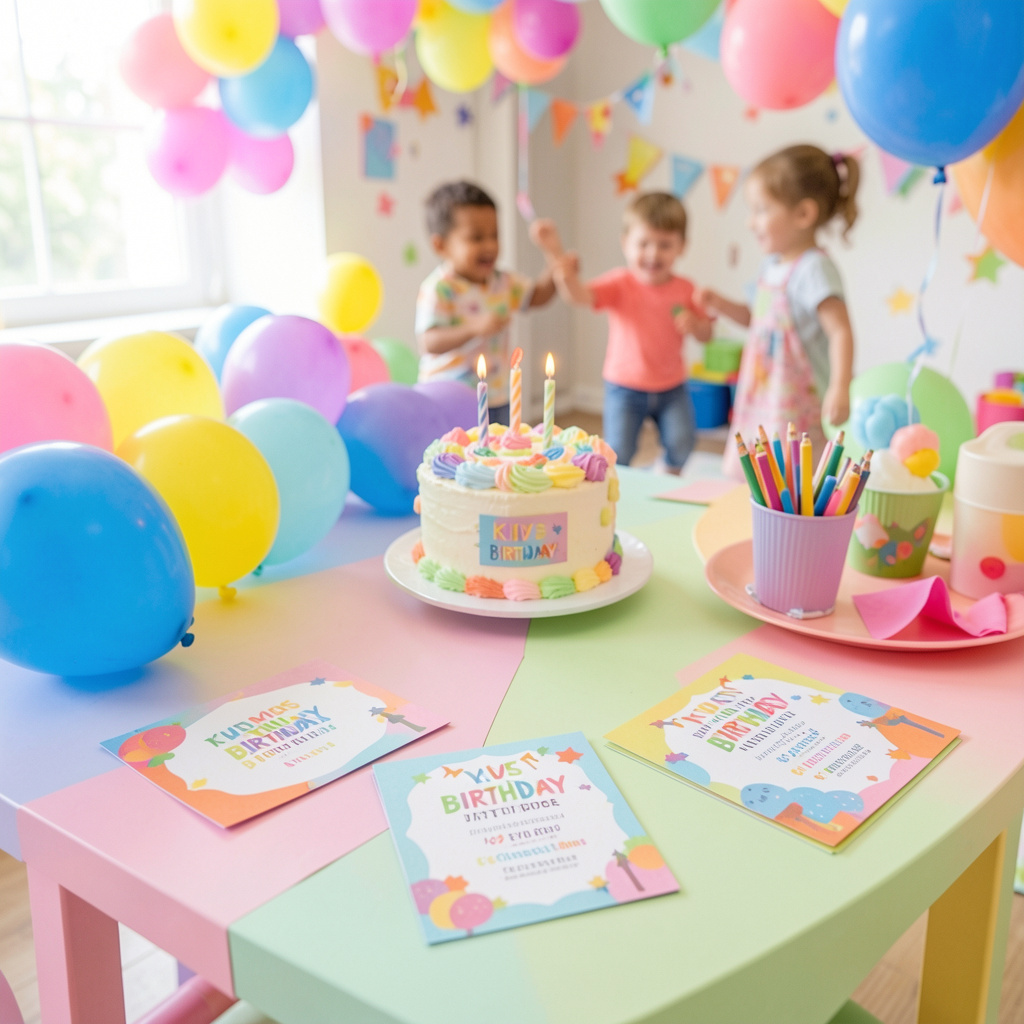
A children’s birthday invitation does not always need bright colors, crowded illustrations, or dozens of decorative elements. Sometimes, a simple and elegant design can make a celebration feel even more special. Clean layouts, thoughtful colors, delicate illustrations, and personalized wording can create an invitation that feels modern while still being playful enough for a child’s birthday.
Simple does not mean boring. The right combination of typography, spacing, photographs, and small decorative details can produce a beautiful invitation that feels polished without becoming overly formal.
Start With a Clean Layout
A clean layout is the foundation of an elegant invitation. Give the main elements enough space instead of filling every corner with decorations.
Place the birthday child’s name or age at the center of attention, followed by a short invitation message and the essential party details.
A balanced layout makes the invitation easier to read and gives it a professional appearance.
Choose a Soft Color Palette
Elegant children’s invitations often look best with a limited selection of colors.
Consider combinations such as:
- Cream and sage
- Pale blue and white
- Blush and beige
- Lavender and ivory
- Soft yellow and gray
- Peach and warm white
- Dusty blue and gold
You can always add one brighter accent color to keep the design youthful.
Make the Birthday Child’s Name the Focus
Instead of covering the invitation with illustrations, make the child’s name the main design feature.
Use a large, attractive typeface and place a few subtle decorations around it.
For example:
Emma
is turning five!
Then place the party information underneath in a clean font.
This approach is simple, personal, and timeless.
Use Elegant Illustrations
You can maintain a child-friendly feeling without using overly cartoonish artwork.
Consider simple illustrations of:
- Balloons
- Stars
- Clouds
- Flowers
- Leaves
- Butterflies
- Little animals
- Birthday cakes
- Crowns
- Bows
Use one main illustration or a small collection of matching elements rather than mixing many different styles.
Try a Minimalist Animal Theme
Animals can look surprisingly elegant when presented in a simple illustration style.
For example, use a delicate line drawing of a rabbit, bear, fox, elephant, or bird.
Place the illustration above the birthday child’s name and use a soft background.
This approach works particularly well for first birthdays and younger children’s celebrations.
Create a Photo-Focused Design
A favorite photograph can be the centerpiece of an elegant invitation.
Choose a clear image with a simple background and let it occupy most of the card. Add the child’s name and party details underneath.
For a more sophisticated look, avoid adding too many stickers or decorative graphics.
A small border or subtle frame may be all the decoration the photograph needs.
Use a Large Birthday Number
For milestone celebrations, the birthday age can become the main visual element.
A large number can be printed in a soft color and decorated with tiny stars, flowers, leaves, or simple patterns.
For example, a fifth birthday could feature a large 5 with the child’s name and party information arranged around it.
This gives the invitation a strong focal point while keeping the overall design minimal.
Experiment With Typography
Typography can create personality even when the rest of the design is simple.
Try pairing a decorative script or handwritten font for the birthday child’s name with a clean sans-serif font for the practical information.
Do not use too many typefaces. One decorative font and one simple font are usually enough.
Make sure the date, time, location, and RSVP information remain easy to read.
Add a Touch of Gold
Gold accents can make a simple invitation feel more celebratory.
You can use gold-inspired details for the birthday number, small stars, borders, or lettering.
If you are designing a printable invitation, a soft golden color can create the appearance of metallic details without making the design too elaborate.
Pair gold with cream, blush, sage, navy, or pale blue for an elegant result.
Try a Botanical Birthday Invitation
Flowers and leaves can create a sophisticated but child-friendly design.
Use simple watercolor-style branches, tiny flowers, or delicate leaves around the border.
A botanical invitation works especially well for garden parties, spring birthdays, tea parties, and outdoor celebrations.
You can make it more playful by adding small illustrated bees, butterflies, or birds.
Create a Storybook Look
A storybook invitation can combine simplicity with imagination.
Use an understated illustration of a castle, forest, moon, or little character and add a short story-like heading.
For example:
“Once upon a birthday…”
Then introduce the birthday child and provide the party details.
This style works particularly well for children who enjoy books, fantasy, or imaginative play.
Keep the Background Simple
A plain background often makes the other design elements stand out.
White, cream, pale gray, soft blue, or light beige can provide a clean foundation.
If you want more texture, consider a subtle watercolor wash, paper texture, or very light pattern.
Avoid backgrounds that are so busy that they compete with the text.
Use a Border
A thin border can give a simple invitation a finished appearance.
Choose a delicate line, botanical frame, tiny stars, dots, or another subtle pattern.
The border should support the design rather than dominate it.
Create a Modern Arch Layout
An arch-shaped frame can give a birthday invitation a contemporary appearance.
Place a photograph or illustration inside the arch and arrange the birthday child’s name underneath.
This design can work with floral, animal, minimalist, or modern themes.
It is especially attractive when paired with a limited color palette.
Consider a Handmade Style
Elegance does not have to mean formal. A handmade appearance can make an invitation feel warm and personal.
Watercolor illustrations, soft pencil lines, paper textures, and simple hand-lettered details can create a gentle aesthetic.
This approach works particularly well for family celebrations and smaller gatherings.
Write Short, Meaningful Wording
Elegant invitations usually benefit from concise wording.
Instead of filling the card with a long paragraph, use a short message such as:
“Please join us as we celebrate [Name]’s special day.”
Then list the essential details underneath.
Simple wording allows the design to breathe and keeps the invitation easy to understand.
Include the Essential Information
Even a minimalist invitation needs complete party details.
Include:
- Birthday child’s name
- Age, if appropriate
- Date
- Start and end time
- Location
- RSVP contact
- Dress code, if needed
- Special instructions
Arrange these details in a clear section so guests can find them quickly.
Choose Quality Materials
If you are printing the invitation at home, consider using good-quality cardstock. A thicker paper can make even a simple design feel more substantial.
Matte cardstock often works well for minimalist designs because it provides a clean surface and is easy to write on.
Always print a test copy before producing the complete set.
Match the Rest of the Party
A simple invitation can become the visual starting point for the entire celebration.
Use the same colors and design elements on the cake, welcome sign, table decorations, party favors, and thank-you cards.
You do not need to make everything identical. Repeating a few key elements is enough to create a cohesive appearance.
Final Thoughts
Simple and elegant Kids Birthday Invitations prove that a beautiful design does not need to be complicated. A carefully chosen color palette, attractive typography, one meaningful illustration, and personalized wording can create an invitation that feels both sophisticated and joyful.
The most important thing is to keep the birthday child at the center of the design. Use their name, favorite colors, interests, or photograph to give the invitation personality.


Leave a Reply